Our ranking
NordVPN #1 pick · Black Friday
Fastest VPN thanks to the NordLynx protocol · No-log policy audited three times
ExpressVPN Halloween deal
In-house Lightway protocol, very fast · TrustedServer: RAM-only servers
Surfshark Best value
Unlimited simultaneous connections · Best value for money on the market
| VPN | Rating | Price/month | Servers | Devices | Refund | Offer |
|---|---|---|---|---|---|---|
| NordVPN | 9.6/10 | 3,49 €/mo | 9 200+ | 10 devices | 30 d. | See |
| ExpressVPN | 9.1/10 | 6,12 €/mo | 3 000+ | 8 devices | 30 d. | See |
| Surfshark | 9.0/10 | 2,19 €/mo | 3 200+ | Unlimited | 30 d. | See |
Which VPNs actually work in China in 2026?
If you are heading to China: tourism, business or expat life, you need a VPN, but you need the right kind. Without one you lose Google (search, Maps, Gmail, YouTube), WhatsApp, Instagram, Facebook, X, Signal, most Western media and every streaming service. The Great Firewall of China is the most sophisticated censorship system in the world, and it blocks the vast majority of VPNs along with the sites.
The short answer: NordVPN, ExpressVPN and Surfshark are the three that still reliably bypass the Great Firewall in 2026, because all three carry obfuscation (stealth) technology. The decisive detail most guides skip is how they do it: none of them has a server inside China. You connect to a nearby server in Hong Kong, Taiwan, Japan or Singapore, and the obfuscation hides the fact that you are using a VPN at all.
Read this before you leave: VPN websites are blocked in China. Install your VPN before you land, at least 48 hours ahead, on every device, and pre-select an obfuscated Asian server. Once you are there, you cannot download the app.
The best VPN for China in 2026 is the one with obfuscation: without it, the Great Firewall spots and cuts the tunnel within seconds.
- NordVPN: most reliable through the firewall (Obfuscated Servers tested June 2026).
- ExpressVPN: the simplest (automatic Lightway obfuscation); Surfshark: the best price, unlimited connections.
- No physical server in China: you go through Hong Kong, Japan or Taiwan. Install the VPN BEFORE you arrive.
Which VPNs really work through the Great Firewall?
This is the question everyone actually types: “Which VPN has a server in China?” The honest answer is that no trustworthy VPN runs physical servers in mainland China, a Chinese-hosted machine could be seized or forced to log, which would destroy your privacy. So the table below is not about who has a “China server”; it is about which VPNs can tunnel through the Great Firewall from a nearby country, and which Asian hop they use to do it.
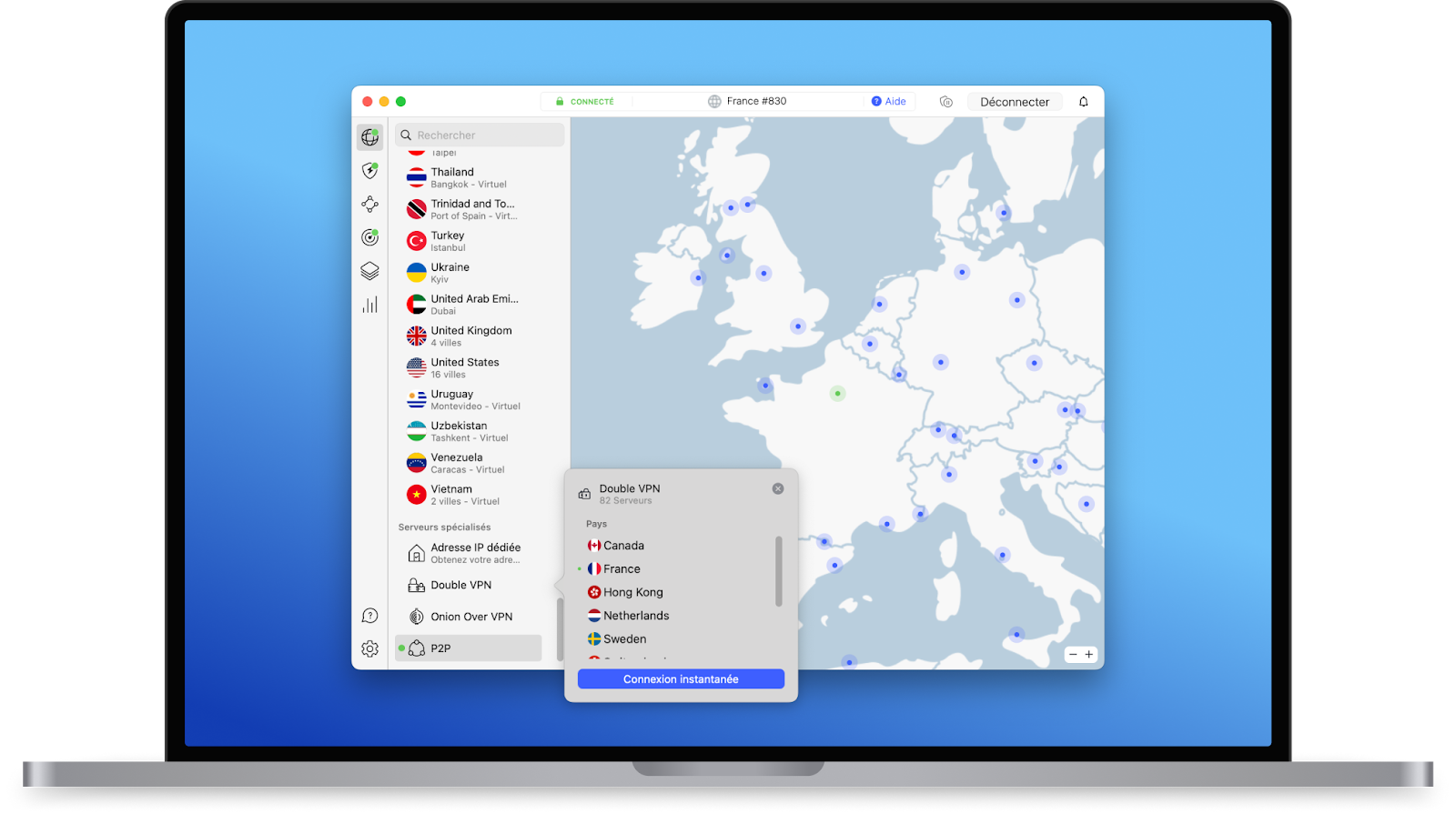
| VPN | How it connects | Server location used | Works through the GFW? |
|---|---|---|---|
| NordVPN | Obfuscated Servers (OpenVPN TCP) | Hong Kong, Japan, Taiwan, Singapore | Yes (tested June 2026) |
| ExpressVPN | Lightway with automatic stealth | Hong Kong, Japan, Singapore, Taiwan | Yes (consistently cited) |
| Surfshark | Camouflage + NoBorders | Hong Kong, Japan, Singapore | Yes |
| Proton VPN | Stealth protocol | Japan, Hong Kong, Singapore | Varies (stealth needed) |
| A “virtual China” IP | Chinese IP, machine in HK/Taiwan | Hong Kong / Taiwan | Not a mainland server |
| Free / “China VPN” APKs | No obfuscation | n/a | Blocked in seconds |
In China, the server location is not the point: the obfuscation is. What keeps you online is the tunnel’s ability to disguise itself as ordinary HTTPS traffic so the Great Firewall’s Deep Packet Inspection cannot flag it. That is why our picks are chosen for their stealth tech first, and why connecting through Hong Kong or Japan with obfuscation on beats any “China IP” gimmick.
Which fits your China use case?
- Maximum reliability through the firewall NordVPN. Its manual Obfuscated Servers (OpenVPN TCP) connected and held through the blocks in independent June 2026 testing. Best for travellers who want the steadiest tunnel and are willing to flip one setting before departure.
- Set-and-forget, zero config ExpressVPN. Lightway carries obfuscation by default and the app auto-switches to optimised stealth servers (Hong Kong, Japan, Singapore, Taiwan) the moment it sees a connection from China. Best for non-technical travellers and short trips.
- A whole family or team on a budget Surfshark. Camouflage Mode + NoBorders give obfuscation on par with the others at a lower price, with unlimited simultaneous connections: one plan covers everyone, plus it unblocks Netflix from China.
What a VPN needs to beat the Great Firewall
The Great Firewall does not just blacklist IP addresses: it uses Deep Packet Inspection (DPI) to read the shape of your traffic and recognise standard VPN protocols. That is why roughly 90% of VPNs fail in China even when they advertise that they work. Three things separate the survivors.
1. Obfuscation (the non-negotiable)
Obfuscation makes VPN traffic look like ordinary HTTPS. Without it, the firewall detects and drops the connection within seconds. Each provider brands it differently: Obfuscated Servers (NordVPN), Lightway stealth (ExpressVPN, automatic), Camouflage Mode (Surfshark). If a VPN does not explicitly offer a stealth mode, skip it for China.
2. Nearby Asian infrastructure, not a “China server”
Since there are no mainland servers, latency depends on the hop. Hong Kong is the fastest exit from the mainland, followed by Japan, Taiwan, South Korea and Singapore. ExpressVPN and NordVPN automatically prefer these when they detect a Chinese connection. A VPN with only European or US servers will be slow even if the tunnel holds.
3. Active maintenance on the China front
The Great Firewall is updated constantly, so a VPN that “worked six months ago” may be dead today. Only providers that refresh their IP pool weekly and can help you in real time when a server is blocked stay usable: exactly what NordVPN, ExpressVPN and Surfshark commit to.
How to set up your VPN before entering China
Three steps, all done at home, not in China.
- Subscribe and install on every device (laptop, phone, tablet) now, not at the airport.
- Enable the right stealth mode:
- NordVPN:
SettingsAuto-connectselectObfuscated Servers, then pick a Hong Kong or Japan server. - ExpressVPN: nothing to do, Lightway stealth is automatic on a restricted network.
- Surfshark:
SettingsVPN settingsenableNoBorders+Camouflage Mode.
- NordVPN:
- Test a connection to a Hong Kong, Tokyo or Singapore server while still at home, and write your login/password on paper. If you get locked out in China you can still email support.
Expert tip: enable the kill switch, and always connect the VPN first before opening Google, Instagram or WhatsApp. A single “in the clear” hit on those services is enough to trip the filters.
Is a VPN legal in China?
It is a grey area, not a clear ban for travellers. Chinese regulations restrict VPNs that are not state-approved, but the law is aimed at Chinese businesses and citizens who distribute sensitive content: no foreign tourist or expat has ever been prosecuted for personal use. Business travellers run VPNs every day without incident. The practical advice: use a mainstream paid VPN, keep it discreet, and avoid publishing politically sensitive content. Chinese services like WeChat, Alipay and Taobao keep working normally with the VPN on, so you can leave it connected.
Is a free VPN enough for China?
No, China is the single clearest case against free VPNs. They simply do not have the obfuscation infrastructure to survive Deep Packet Inspection, so the Great Firewall detects and blocks them within seconds, and even Proton VPN’s free tier offers no obfuscation. Worse, many “free China VPN” APKs are hosted inside China and actively log your traffic, which is the opposite of what you want under the firewall. Only premium paid VPNs with stealth tech hold up; treat the 30-day money-back guarantee on NordVPN, ExpressVPN or Surfshark as your real free trial, tested on Asian servers before you fly.
China VPN on mobile (iPhone, Android, APK)
Most travellers connect from a phone, and the mobile setup has China-specific traps:
- Install before you land: once you are on the mainland, app stores and VPN sites are blocked. Apple has pulled VPN apps from the Chinese App Store since 2017, so download from a Western App Store account first.
- Android: install from Google Play before arrival, never a random “China VPN” APK. Those are riddled with adware, and the China-hosted ones log everything.
- Turn stealth on inside the app: NordVPN: Obfuscated Servers; ExpressVPN: automatic via Lightway; Surfshark: Camouflage + NoBorders. Pre-select a Hong Kong or Japan server.
- iPhone: enable “connect on demand” so the tunnel comes back automatically after a network drop, and keep the kill switch on.
What NOT to do in China
- Rely on a free VPN: none survive the Great Firewall, and many log your traffic.
- Use Tor alone: massively blocked, even with obfs4 bridges; latency is unbearable.
- Download the VPN from the Chinese App Store: Apple has removed them since 2017.
- Use a Chinese VPN (SuperVPN, QuickVPN, etc.): either state-controlled or blocked.
- Forget the kill switch: any momentary drop exposes your real traffic and can trip a hotel Wi-Fi block.
Verdict: which VPN to choose for China in 2026?
- Best overall: NordVPN, proven Obfuscated Servers, fast NordLynx, 10 devices, Panama jurisdiction. From €3.49/mo.
- Easiest for travellers: ExpressVPN, automatic Lightway stealth, 24/7 support, ultra-polished apps. From €6.12/mo.
- Best price: Surfshark, Camouflage + NoBorders + unlimited connections. From €2.19/mo.
All three come with a 30-day money-back guarantee. Our advice: install NordVPN or Surfshark today, test it for a week at home on Hong Kong and Japan servers, then travel with peace of mind.
To go further, see our overall best VPN comparison for 2026, our detailed NordVPN review, our Tor vs VPN guide (and why Tor alone fails in China), or our guide “What is a VPN?” if this is your first one.